Chinese Wisdom
Thousands of years of philosophy, distilled into words that speak to the soul.
智者不惑 · 仁者不忧 · 勇者不惧
Ancient Words,
Timeless Relevance
For over three thousand years, China's great sages have offered counsel on how to live with purpose, harmony, and grace. From the courts of the Zhou dynasty to the mountains of Taoism, these words were carved into jade, brushed onto silk, and passed down through generations.
Chinese Wisdom brings this vast tradition to your pocket — curated quotes from Confucius, Laozi, Sun Tzu, Zhuangzi, and many more. Each morning, begin with a thought that grounds you. Each evening, reflect with one that inspires.
Words That Endure
"It does not matter how slowly you go as long as you do not stop."Confucius
"Nature does not hurry, yet everything is accomplished."Laozi
"Know yourself and know your enemy — in a hundred battles you will never be in peril."Sun Tzu
"To the mind that is still, the whole universe surrenders."Zhuangzi
"The great man is he who does not lose his child's heart."Mencius
"A gem is not polished without rubbing, nor a man perfected without trials."Chinese Proverb
Masters of Thought
Father of Confucianism, his teachings shaped East Asian civilization for millennia through ritual, morality, and social harmony.
老Author of the Tao Te Ching, the foundational text of Taoism, teaching harmony with the natural way of things.
孫Military strategist and philosopher, his Art of War remains one of the most influential treatises on strategy ever written.
莊Taoist philosopher renowned for his wit and imagination, exploring freedom, nature, and the relativity of all things.
孟The Second Sage of Confucianism, champion of human nature's innate goodness and the people's right to just governance.
荀Confucian rationalist who argued that goodness must be built through ritual, education, and persistent effort — never assumed.
韓Greatest theorist of Legalism, whose analysis of law, power, and governance formed the intellectual basis of China's first empire.
蘇Song Dynasty polymath — poet, essayist, and calligrapher whose wit and equanimity in exile made him the most beloved figure in Chinese literature.
司Father of Chinese history, who endured disgrace to complete the Records of the Grand Historian — two thousand years in 130 chapters.
王Ming Dynasty philosopher-general who taught that knowing and doing are one, and that every person already possesses innate moral wisdom.
See the App
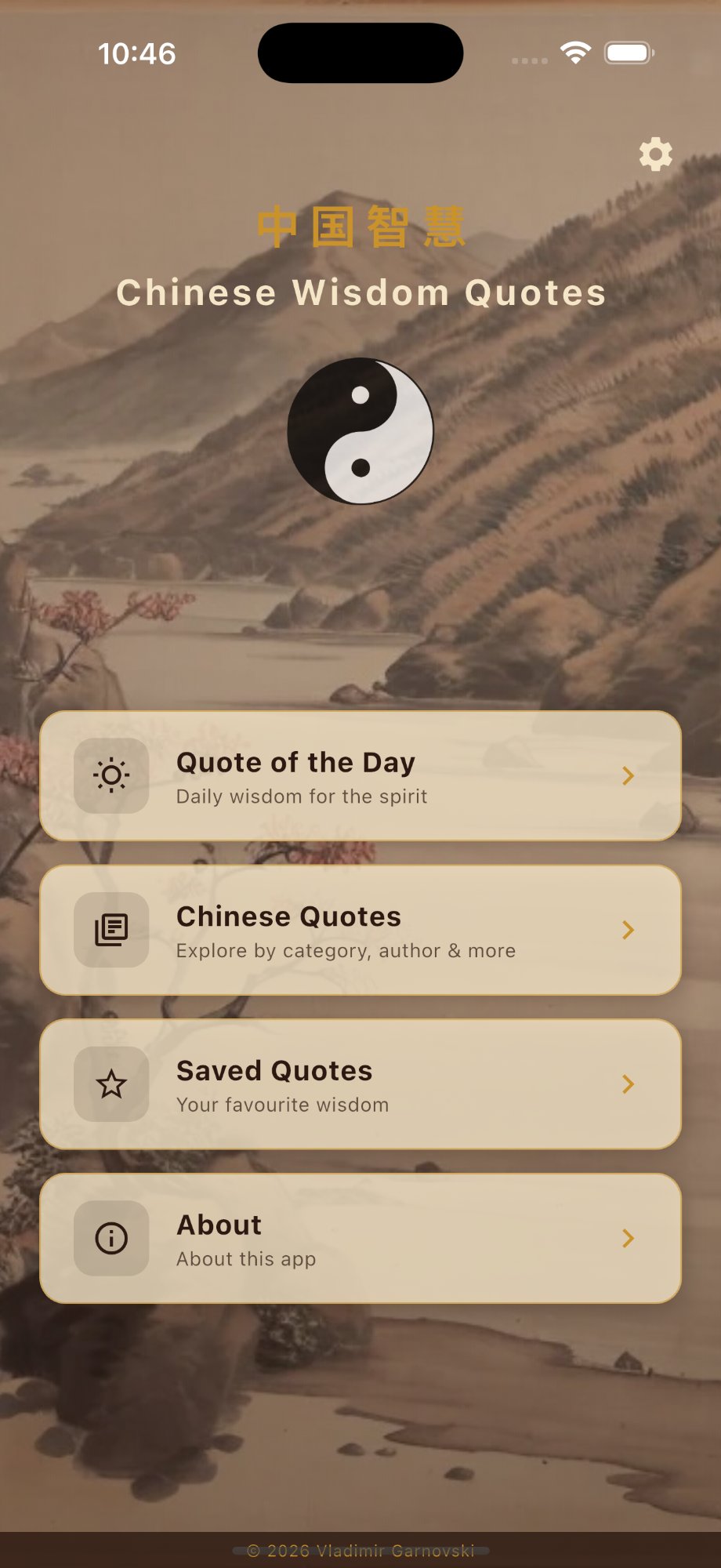
Home Screen
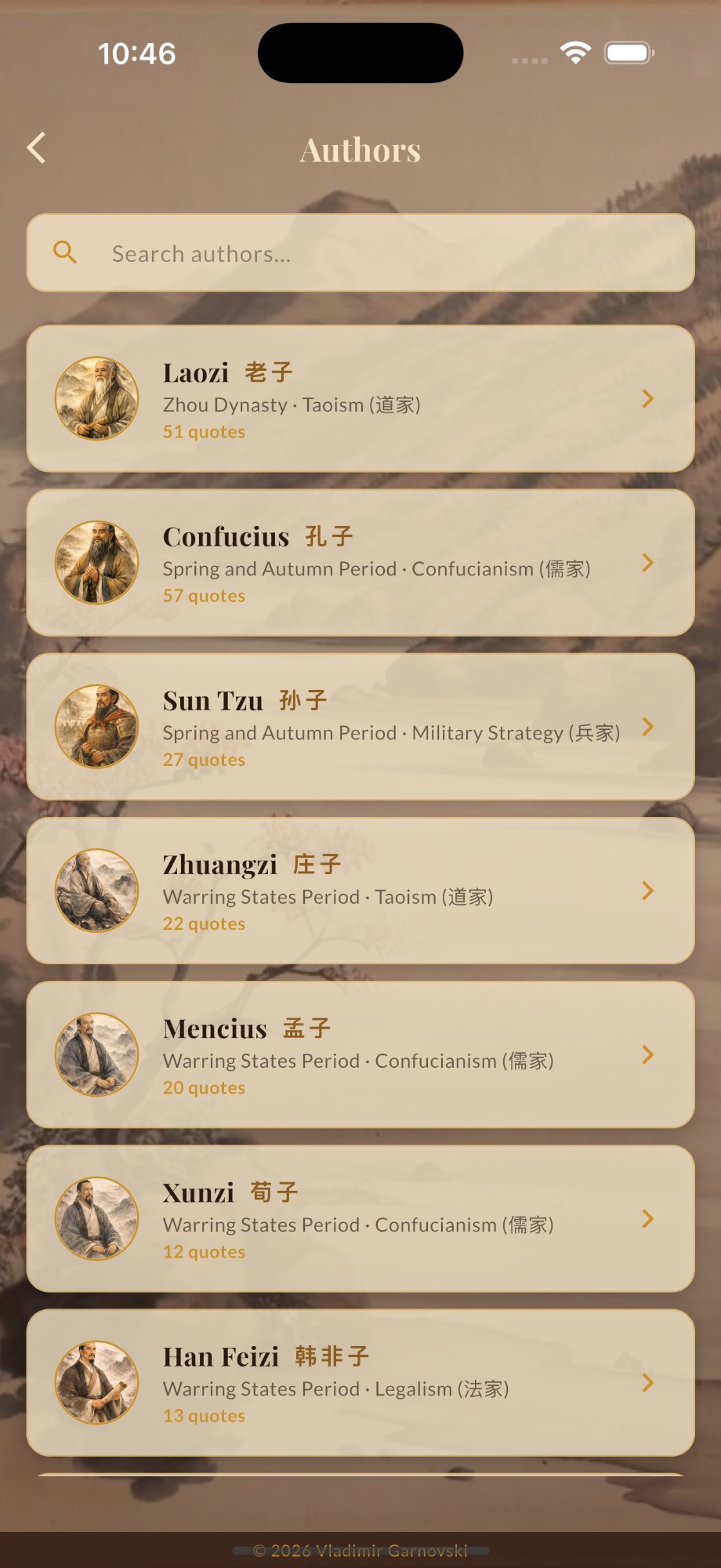
Browse Authors
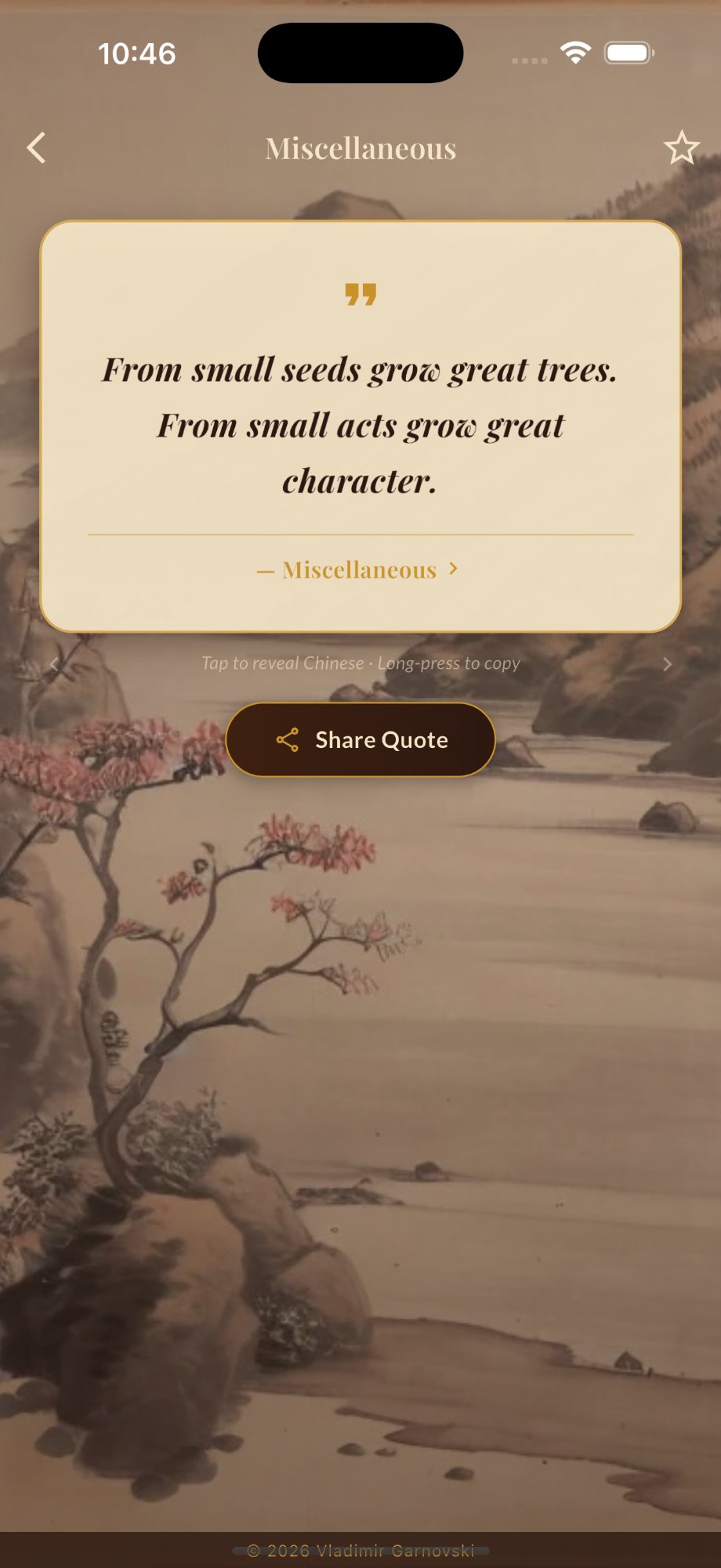
Quote of the Day
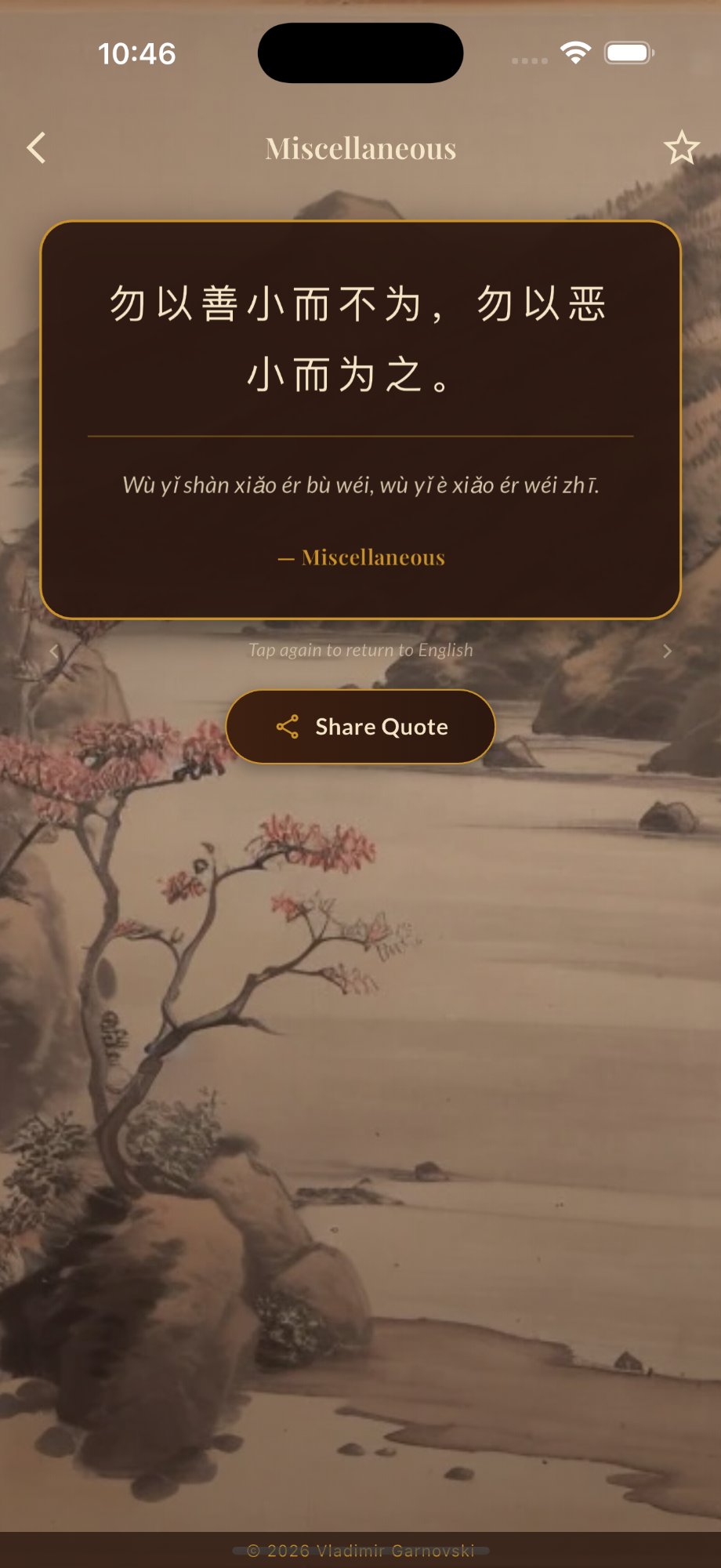
Chinese & Pinyin
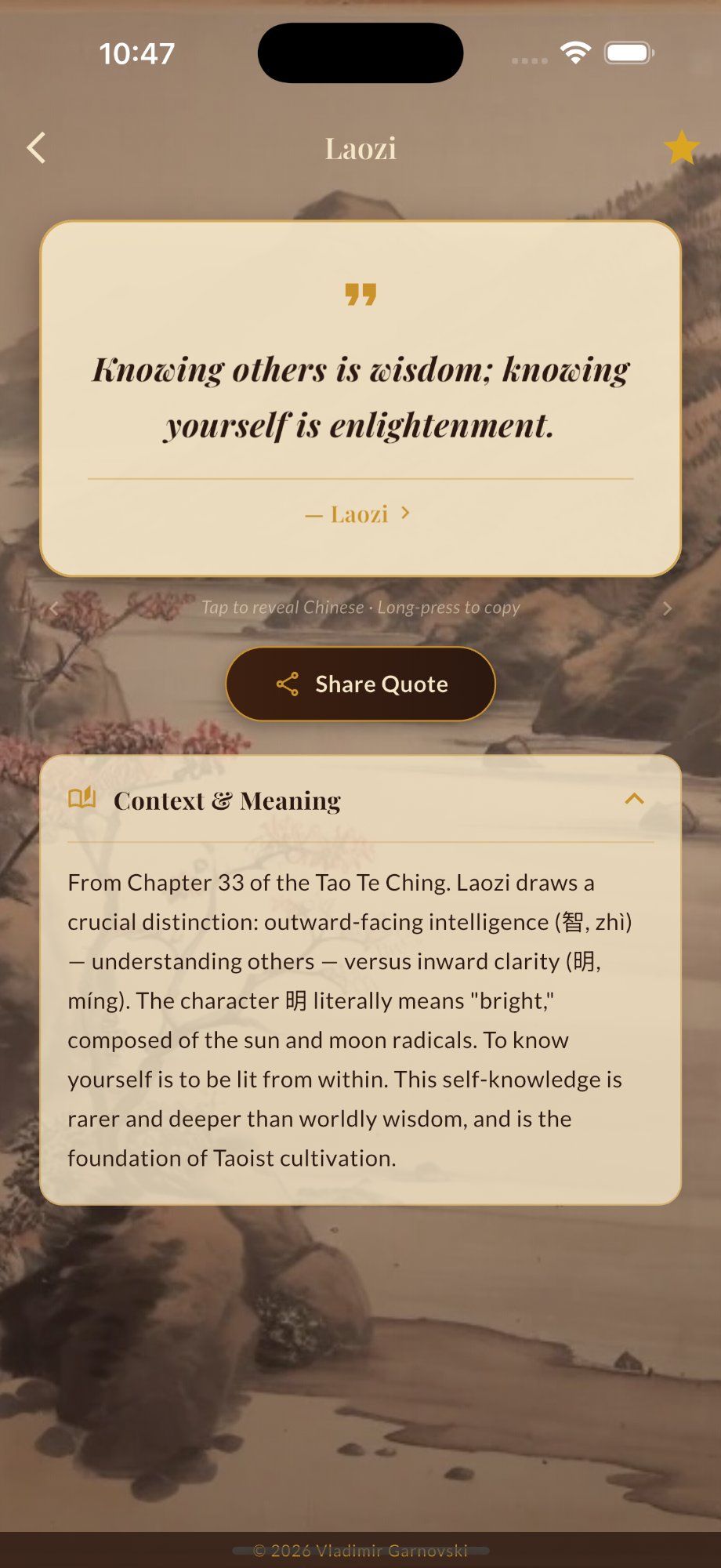
Context & Meaning
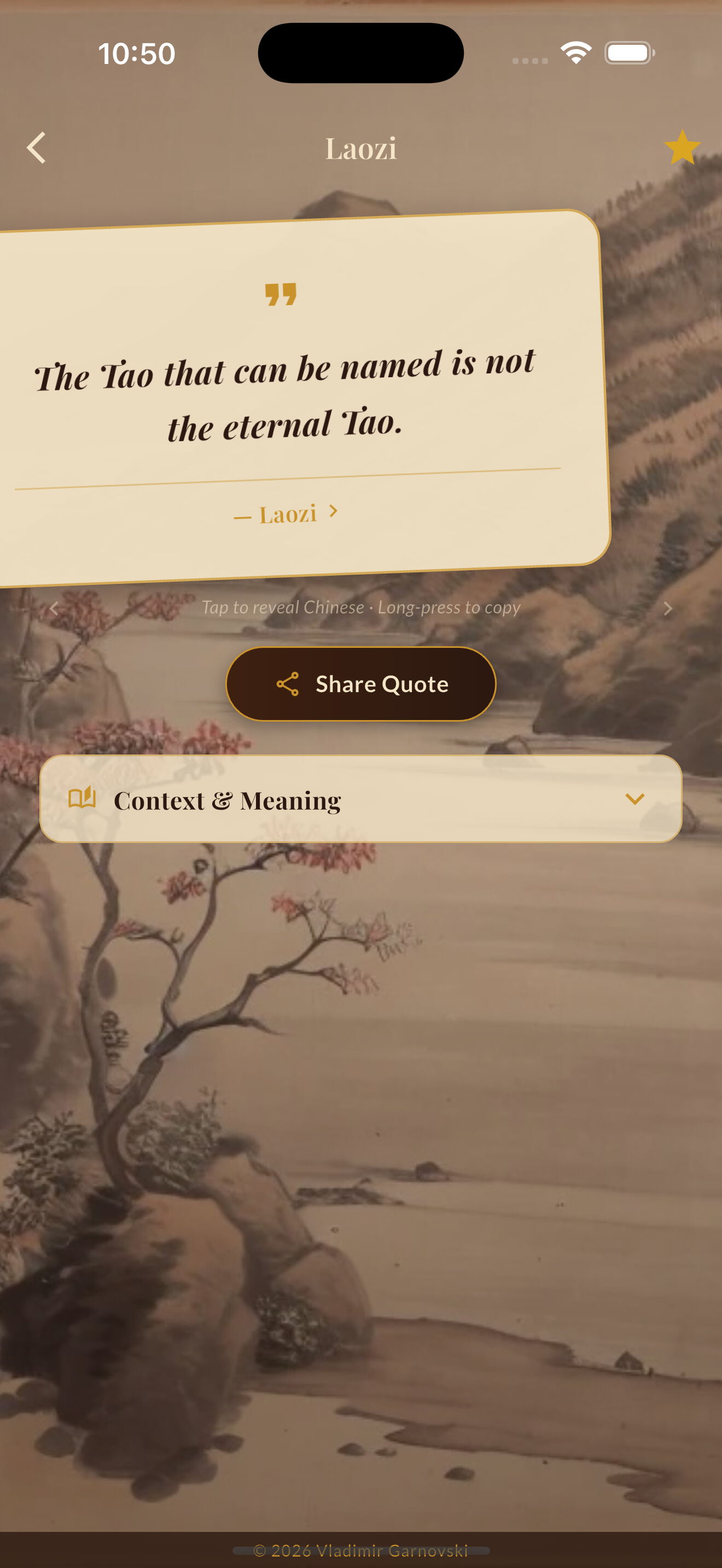
Save Favourites
Wisdom in Your Pocket
Start each day with a handpicked quote from China's greatest thinkers. The Chinese Wisdom app features thousands of sayings across philosophy, strategy, nature, and the heart — available on both iOS and Android.
Daily Quotes
A new quote each morning, with original Chinese and English translation.
Deep Library
Browse by philosopher, dynasty, theme, or mood.
Save & Share
Bookmark your favourites and share wisdom with those you care about.